Let us know if an answer helps, or ask a follow-up.
Are you building both sites?
We don't know yet. Each site suits different kinds of projects. Which comes first depends on who commits to build and when power is ready, and neither would be built all at once.
Could both be built at the same time?
It's not likely. One site would start first, and the other could follow a year or more later. SkyLine could even go first. A project this size does bring change to a community, and our job is to keep it manageable. The county's conditions on worker housing, traffic and roads hold us to that.
Where would the power come from?
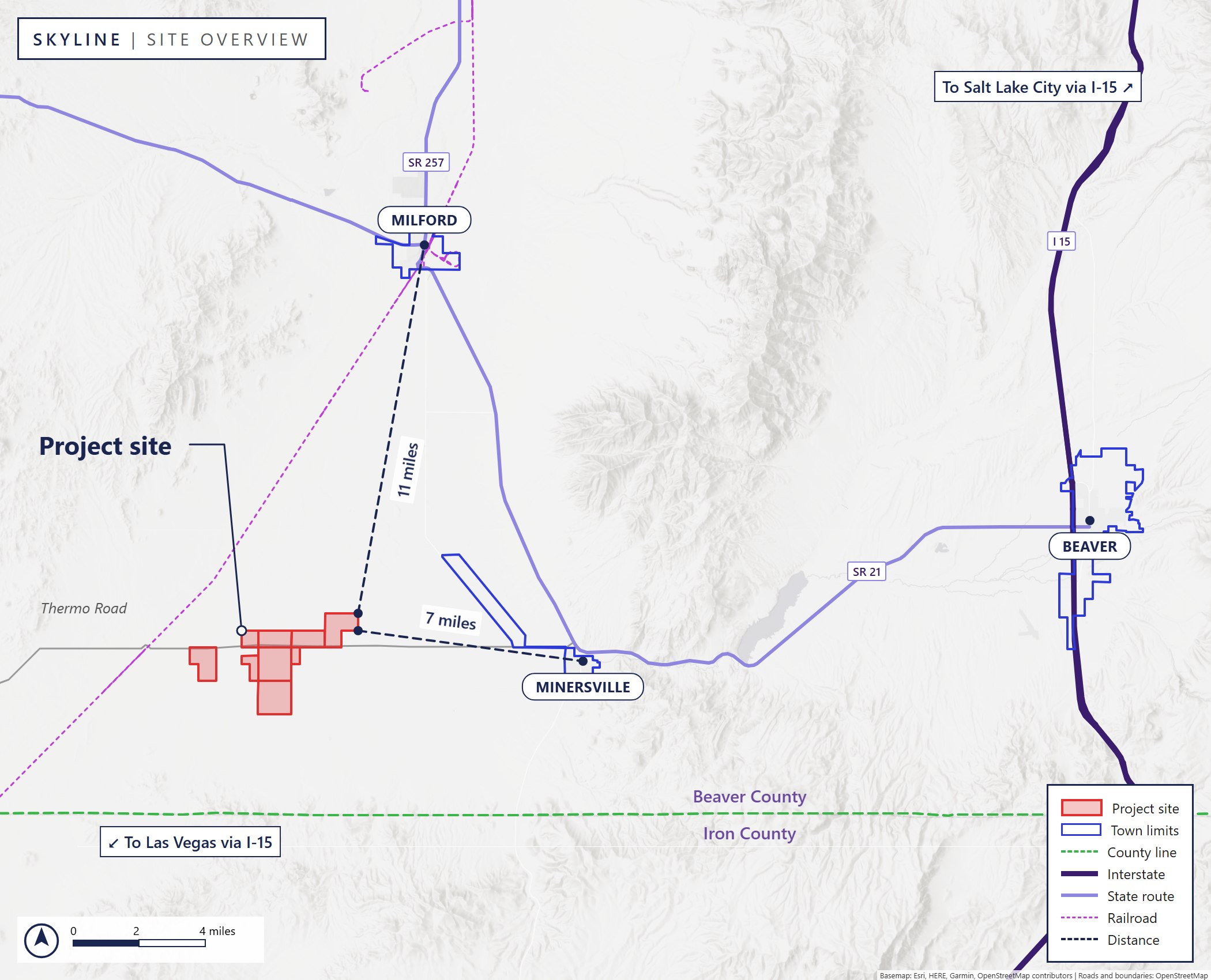
Natural gas is the starting power supply, made on site. It can be built on the schedule a data center needs. Over time, the plan is to rely more on power produced in the valley, such as solar, storage, the grid and geothermal, which would reduce how much the gas plant runs while it provides backup. None of those sources is under contract, and each needs its own approval. At SkyLine, solar with battery storage is part of the request from the start.
Gas generation is limited to 1,000 MW for the life of each permit and is built in steps as the campus grows. The power plant needs a state air permit with enforceable limits before it can be built.
How much water would they use?
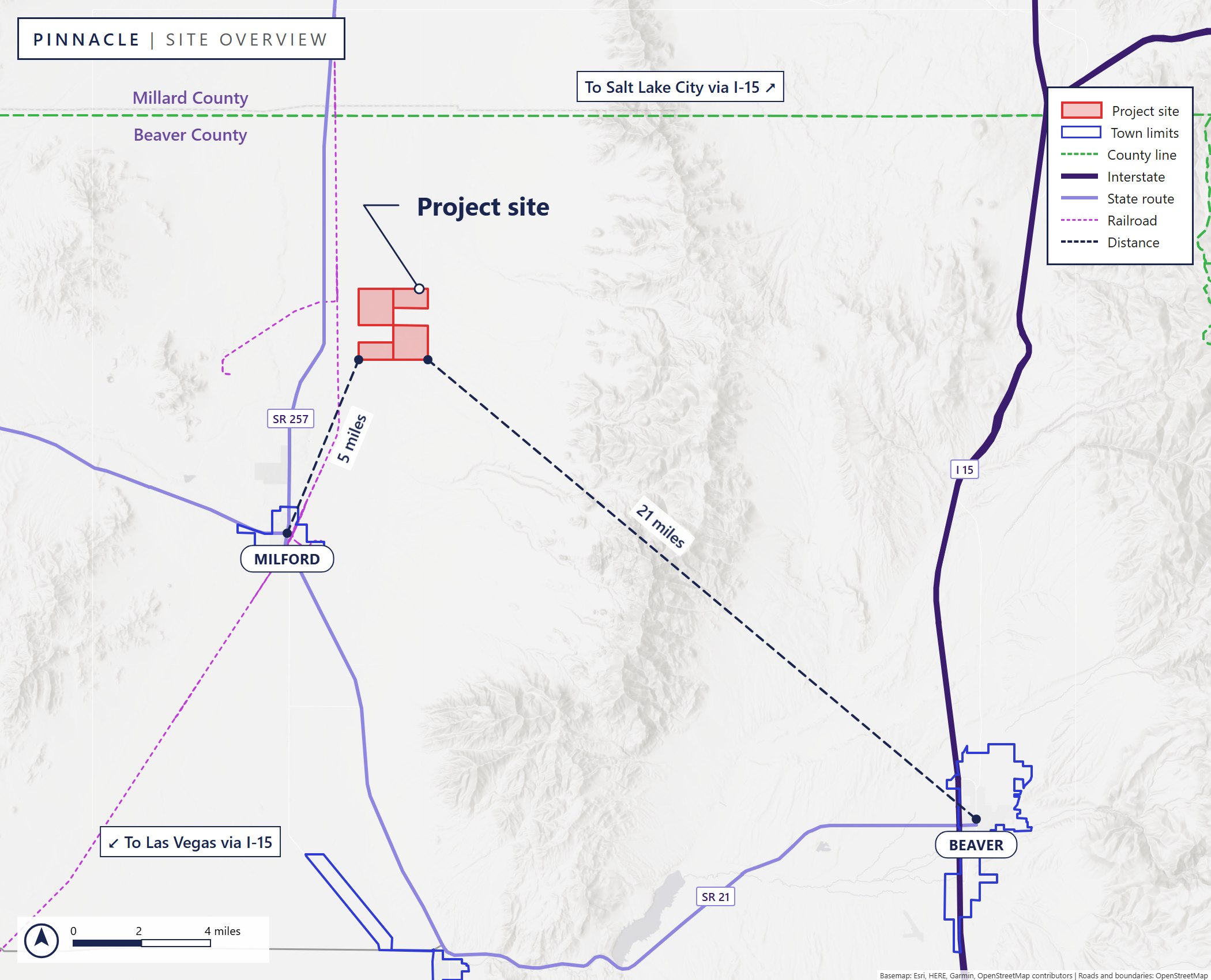
Far less than the permits allow. Cooling runs in a sealed loop, like a car radiator, so after the first fill it needs very little water. At Pinnacle, we expect about 300 acre-feet in the busiest construction year and about 200 once built, including the power plant. Each permit limits water use to 500 acre-feet a year, metered at the wells and reported every year. At Pinnacle, that limit is about a third of what the existing water right allows. The water comes from private wells on the property.
Will we hear or see them?
The nearest homes are about 4.5 miles from Pinnacle and about 3.1 miles from SkyLine. Sound there is expected to be far below the county's limit, and the noise study the county requires will confirm it. The limit applies day and night and is checked when each phase starts up and twice a year after. Outdoor lights are shielded and aimed down, use a warm color, and are checked at night when each phase opens.
What about workers and traffic during construction?
Construction would happen in steps over many years, with no work overnight or on Sundays. Before it starts, the county requires a plan for where workers live and how they get to the site, along with a traffic study and a road maintenance agreement. The project pays for the road work it needs, and improvements are finished before the traffic that needs them.
How would the buildings be built?
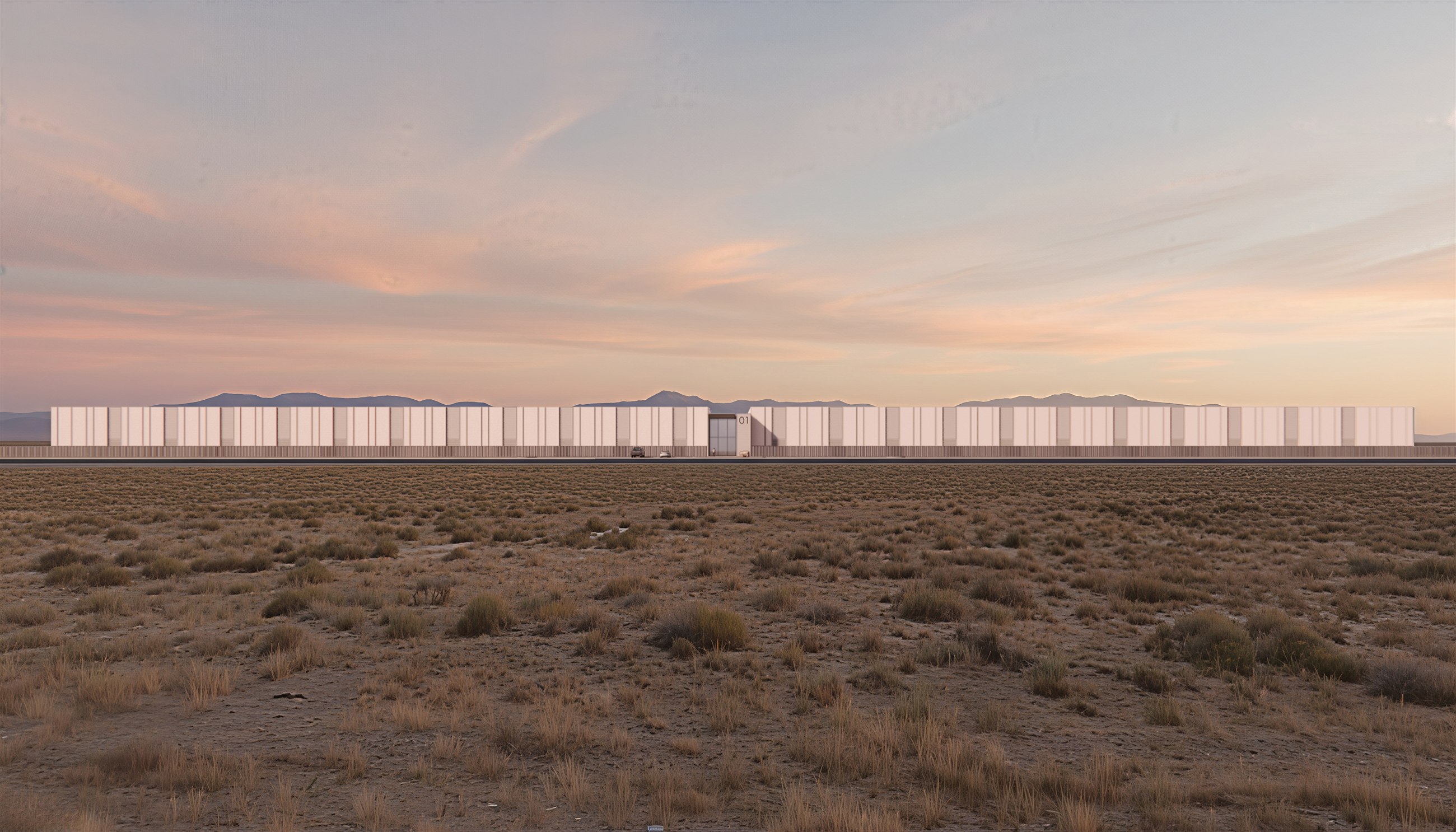
One option we're evaluating is building much of each data center in factories and bringing it in by rail, then assembling it on site. That could need roughly half the on-site workforce of conventional construction. It's a planning approach, not a requirement, and we're also looking at whether some of that work could happen in the valley.